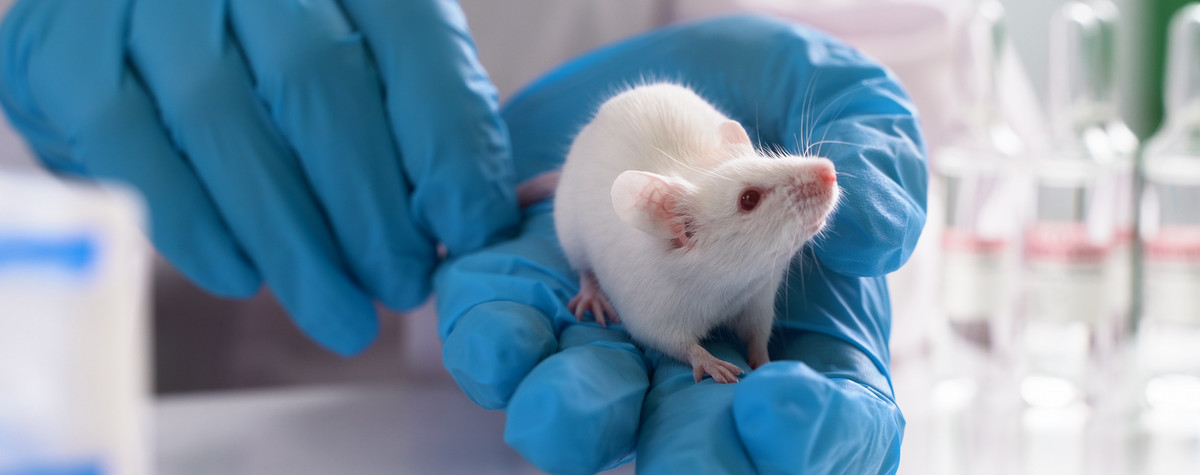
All personnel with contact or exposure to laboratory animals or listed on an IACUC protocol must enroll in the LAOHP through the Occupational Health Surveillance System (OHSS) which is hosted on the Risk & Safety Services platform. Enrollment must be submitted at least once per year.
Visit the IACUC website to learn more about the LAOHP.
Training Guides
Ready to Enroll?
Log in using your UCI credentials: Occupational Health Surveillance System (OHSS)
Frequently Asked Questions
- How do I decline participation in the LAOHP?
At this time, the OHSS does not have an opt out option. To decline participation, the PI or Supervisor will need to select “No” to the use of animals on the Risk Assessment form in OHSS. - Can a lab member/participant complete their own risk assessment?
No. The PI/supervisor must complete the Risk Assessment and assign it to the lab member. Refer to the Supervisor Training Guide for steps on how to do this. - Can a PI create and assign their own risk assessment?
Yes. - There are many animal researchers in my lab. Do I have to fill out a blank risk assessment for each one of them?
OHSS has a ‘copy’ feature that allows a supervisor to copy an existing risk assessment and revise it for each participant. Refer to the Supervisor Training Guide for steps on how to do this.
The primary way that researchers communicate hazards to vivarium staff is through signage at the door and cage levels.
Animal Room Hazard Door Signs
If an agent is found to be hazardous (consult the Safety Data Sheet or your BUA) and requires special attention to bedding and waste disposal, the researcher generates an animal room hazard door sign for that agent and posts it outside of the animal holding room. Completed door signs must be uploaded as an attachment to the Animal Use Protocol (AUP). Pre-filled templates for common biological and chemical agents requiring door signs are available below. If your agent is not available, create one using the General Form. Contact the vivarium safety officer (msupnet@uci.edu) if you have any questions.
Additional hazard communication signage, such as for designated Animal Biosafety Level 2 rooms, may be required. Signage must adhere to institutional and facility requirements. Consult with EHS and ULAR if additional signage is required for the animal room.
General Form (Blank Form)
Biological Agents - Human Cells
Biological Agents - Viral Vectors
Chemical Agents
Hazard Cage Cards
Researchers must also communicate the presence of a hazard using cage-level hazard cards. In addition to hazard door signs posted outside the room, applicable cages must be labeled with the appropriate hazard cage cards (biohazard or chemical) during the hazardous period (e.g., agents are shed and thus can contaminate bedding) or as required by EHS. Information on the cage cards must align with the approved safe use of the agent, such as described in standard operating procedures or in the Biological Use Authorization. Hazard cage cards are provided by ULAR. Consult with EHS if you need additional guidance with the safe handling and management of a hazardous material you will be using.

Refer to the following SOPs and guidelines regarding the use of hazardous materials in animal research.
An SOP must be approved by the lead researcher/PI of the Animal Use Protocol (AUP), reviewed by animal researchers, and then acknowledged by signing it. The signed SOP(s) must be uploaded as an attachment to the AUP. Consult with EHS if you need additional guidance with the safe handling and management of the hazardous material you will be using.
Biohazardous Agents
- Human Materials
- Viral Vectors
- Animal Biosafety Level 2 (coming soon)
Hazardous Chemicals
Radioactive Agents
Refer to these reference guides and safety moments for additional information on topics relevant to animal research and operations. Supervisors/PIs are encouraged to review this information with their unit as applicable.
General Safety
Physical Safety
Electrical Safety
Chemical Safety
Occupational Health